Simple Feed
November 22, 2021
Five ways to become a stronger long course runner
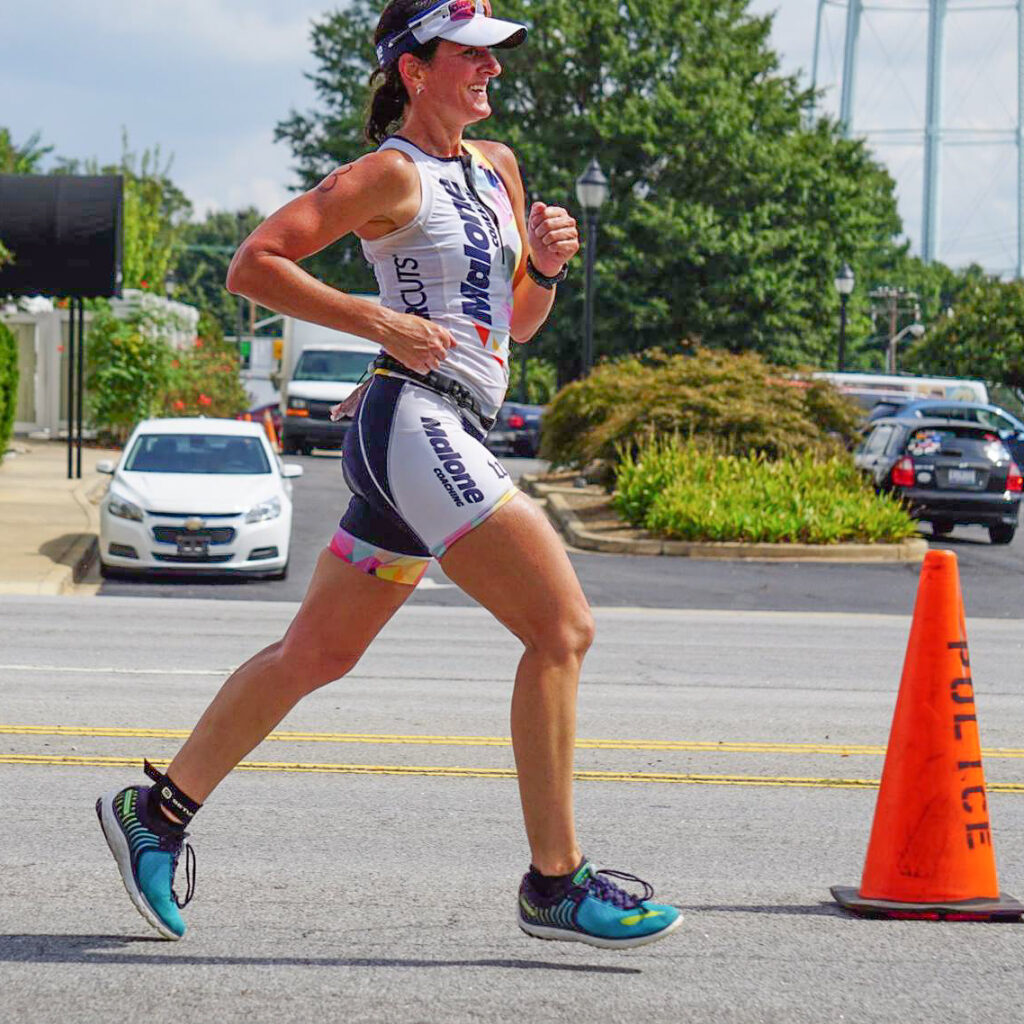
Running well off the bike is a combination of five main factors. Training specificity, or simulating what happens during a race, in your brick sessions is one aspect. Making sure that not too much energy is expended on the bike through proper pacing is another. Fueling your body with proper nutrition is a third. A fourth consideration is bike fit, along with general muscle balance and overall flexibility. A final aspect, often overlooked, is the importance of mentally being prepared to deal with that change from cycling to running.
Here is a list of how you can address each area to build your ability to run well off the bike.
1. Specificity of Training
Training specificity involves running off the bike at a pace you aim to maintain during your 70.3 or IRONMAN distance event. There are several reasons for this. One is getting accustomed to the different motion of the legs and the fact that the legs are now supporting the weight of the body. Another is training the body for the endurance and speed for the duration of the run. The best way to accomplish this is to consistently incorporate runs after both long and short rides, known as “bricks”. These brick runs will vary in duration and intensity through the different phases leading up to a race.
In the General Preparation Phase the goal is to condition the body with short 15 to 20 minute base runs following at least one bike ride per week. During shorter weekday rides, the runs can be at a higher heart rate. As you transition toward the Specific Phase the runs increase in duration.
The closer to the event, the more the runs should mimic the demands of the race. At this point they should also be at or slightly above race intensity. One example is 45 minutes as 30 minutes at goal race pace and 15 minutes easy. Another is 4 x 1 mile at 10 to 15 seconds faster than goal race with 2 minutes easy jog in between efforts. It is also crucial during the final six to eight weeks to dial in race nutrition, both on the bike and the run. The gut needs to be trained to absorb enough calories to maintain race pace.
2. Pace Your Bike
In the same vein, your pace on the bike is a huge factor that affects the run. Ride too hard and there is nothing left in the legs to push for the final 13 or 26 miles on foot. This is where having a power meter and performing consistent testing throughout training is invaluable. There is a fine line between having a superb bike and a miserable run. For strong age group competitors, maintaining an effort of 75 to 88 percent of Functional Threshold Power (FTP) for a 70.3 distance event and between 70 and 80 percent of FTP for an IRONMAN is a general rule of thumb. If you expect to be on the course longer, then these numbers need to be dialed back.
3. Perfect Your Nutrition
No matter how fit you are, if your nutrition strategy is not adequate you will eventually face the consequences. Use every opportunity, especially your race specific training, to experiment and figure out just what does and does not work for you.
Another factor of going too hard on the bike is that your leg muscles are drawing the oxygen rich blood from your heart. This means that your stomach does not empty of nutrients and fluids quickly enough, leaving you with that sloshy feeling starting the run. This then requires you to slow down to regain composure and energy.
4. Work on Your Bike Fit and Flexibility
Bike fit and body conditioning will also impact running off the bike. The ultimate purpose of riding a time trial bike is to be as aerodynamic as possible. But this should not be at the expense of comfort or the ability to produce power. If you look at pure time trial racers the position is extremely aggressive as the riders do not need to run afterwards.
As a triathlete, you are looking for a position that is balanced and allows a fairly wide range of motion at the hips. If your hip angle is too tight the hip flexors may tighten up and this will negatively affect your stride. This is why some triathletes opt for higher aerobars, or shorter cranks in order to open up the hips. To run well, your running motion needs to be fluid and relaxed.
The same thing needs to be considered with conditioning and flexibility. Many athletes tend to have occupations that require hours of sitting at a desk in a hunched over position. Regular standing and stretching as well as a routine such as yoga can alleviate this shortening of the hip flexors, lower back and hamstrings. This is perhaps one of the biggest limiters we see with the amateur athlete; finding time to develop a core strength and stretching routine. Most older athletes that are performing well are proactive about core strength and flexibility.
5. Improve Your Mental Strength
A final note to consider is the mental component of a successful run off the bike. Towards the end of the bike, many athletes are ready to get off the saddle and start running. However the changeover is often mentally tough. As the speed is significantly slower resulting is less air cooling, body temperatures often rise, and the perception of speed can feel very slow. Know this in advance and prepare for it. Use the first few miles to dial in a rhythm by focusing on cadence and proper form. Once the body settles in the mind can then pick off one segment at a time. It is important to stay in the movement and not get too far ahead of oneself during the run.
Begin to incorporate some or all of the above elements in your training and the races will become that much more satisfying. And complete.
Thanks to LifeSport Senior Coach Lance Watson for his contribution to this article.
LifeSport coach Dan Smith is a NCCP certified triathlon coach whose experience over 20 years has lead athletes to secure a spot in Kona and hit the podium on a consistent basis. Dan’s knowledge and experience allows him to customize a program for beginners to pro athletes. Contact Dan to share your goals, race faster, or master the Ironman distance.
November 22, 2021
New swimmer: Are you overthinking it?
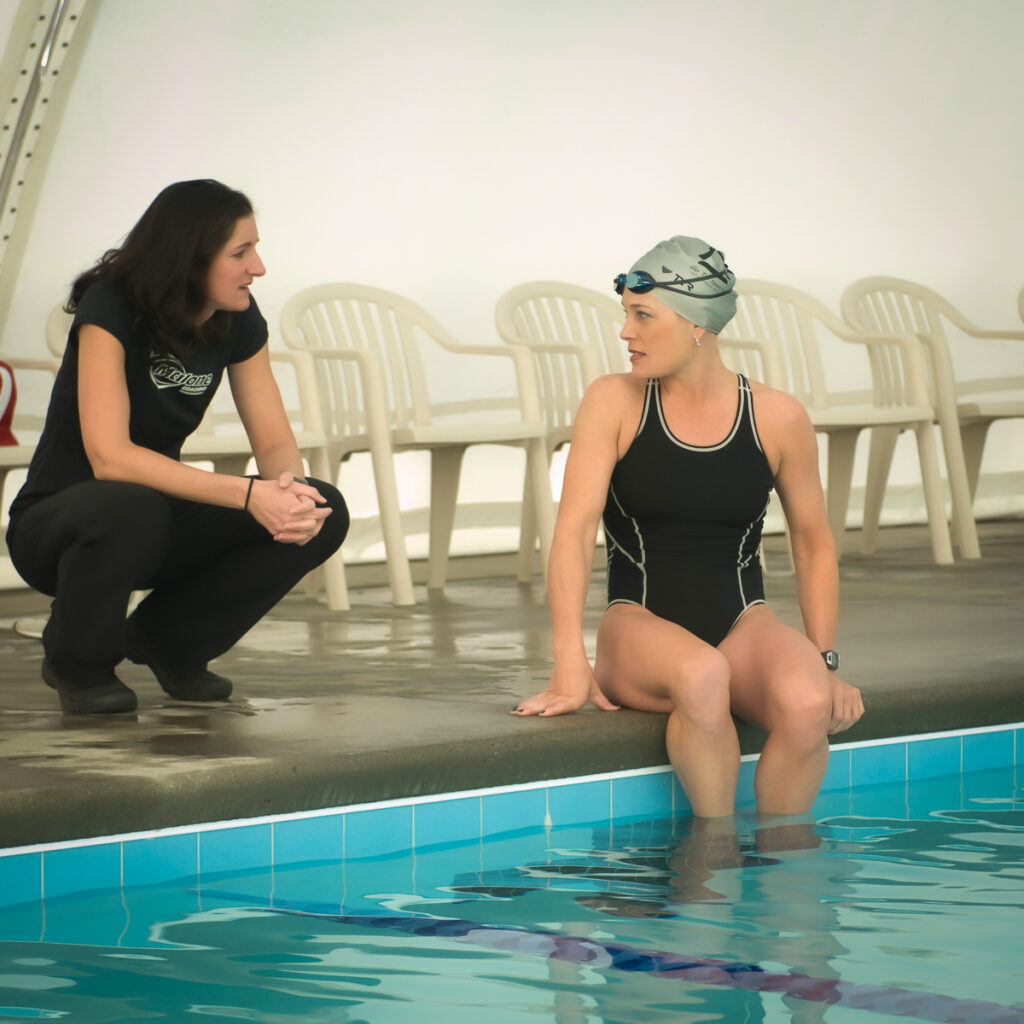
“Here is what goes through my head on a 100m effort in a group swim….
Five seconds after she leaves I go. Ok, go. Pace my arms evenly. Count strokes, breathe in the pocket, lead with my middle finger, keep the anchor arm out, don’t drop my right arm when I breathe, oops! There’s the wall, streamline, how many strokes was that? Must have been 15 because there were two strokes before the turn, keep it long, don’t hold your breath – exhale evenly. Am I leading with my middle finger? Think fingertip drill – keep those elbows high, 11 – 12, there are the flags, this is going to be 16, damn, whoa, almost hit that guy on the turn, is he getting closer? Focus, don’t shorten up, anchor arm, breathe behind you, are those her bubbles? Or my bubbles? Would I even be able to see my own bubbles? Keep your head down, look for the bottom of the pool, hook your arm at the catch so I feel the lats, no, that doesn’t mean drop your anchor arm, there has to be a tipping point there. Hey! there’s a guy in the lane next to me – wonder if I can stay with him, there’s the blue T…if I stretch I can flip…damn nearly missed the wall on that one. Ok, I must be close to her because it’s getting really choppy in here. Breathe evenly, stay long. Is she going to be pissed if I smack her feet? If I angle my arms to the right lane line maybe I won’t hit her. I think that was the same number of strokes per length except the first one. I wonder how many we’ve done? Good thing she’s counting. Oops – there’s the wall”
Recent recollections from Juliet, a former Olympian, newer swimmer, and cerebral athlete.
This excerpt is an interesting thought process to analyze. Most of the technical elements are super relevant, and the experiential aspect of trying to improve technique and swim faster while navigating other athletes is something we can all relate to.
The reality is how can you possibly improve with so much going on at once? For the newer swimmer, I like to simplify. You have to finish elementary school before you go on to high school and college. As adult swimmers, we often try and skips steps and go straight to college.
I like to encourage my newer swimmers to pick simpler themes, and try not to overthink things.
Consider these 5 points, and try not to go on to the next step until you have mastered the prior step!
- Relax and Play.
Many of us over achieving super-swimmer-wannabees try too hard. We are robotic in our movement and our mind is cluttered. Watch a kid swim. They are loose, fluid and sometimes are goofing around in there. They move, play and feel the water.
Breath. Smile. Loosen up. Enjoy moving through the water. This is your play time.
- Float and Glide.
Heavy legs are anchors and wide legs make a wide slow boat. While you are relaxing, (see #1) focus on floating. Keep your head low and your legs shallow, be horizontal. Push off the wall, ride the glide, swim narrow and swim shallow.
- Pick a Simple Theme.
Once you can float, then you can pull and kick. We all have technical elements to work one. Pick one! Visualize moving well before you get in the water, and pick a single technical cue to practice that day, or for at least half the practice. When you fix one thing you often inadvertently fix something else too. It’s a biomechanical chain reaction.
- Quantify and Feel.
How do you know if you are improving if you don’t measure it? Counting strokes is a great way to measure efficiency. Less strokes to get to the end of the pool sounds efficient, right? Count regularly. Time yourself each day and FEEL how fast you are moving. After a while you can internalize an effort and know how fast you are swimming without looking at the clock. That’s handy in open water.
When you are good at counting and timing, you can combine the two. Taking fewer strokes at the same finish time is a nice indication of increased efficiency. You will feel more water pressure against your arms and you will feel your body flow fluidly through the water.
- Focus on what’s working.
Swimming is technical and sometimes things don’t click. Rather than over analyzing, or reconstructing your stroke, instead focus on something that is working. If your left arm catch is wonky, focus on your stroke rate. If your kick timing is off and you just can’t get it, focus on your breathing. If you are working hard and times are not great today, focus on relaxing and swimming the same times with less effort. Reinforce a positive element in your stroke rather than fixating on one that isn’t.
Lance Watson, LifeSport head coach, has trained a number of Ironman, Olympic and age-group Champions over the past 30 years. He enjoys coaching athletes of all levels. Contact Lance to tackle your first IRONMAN or to perform at a higher level.