Simple Feed
November 22, 2021
Mental mastery of the Ironman marathon
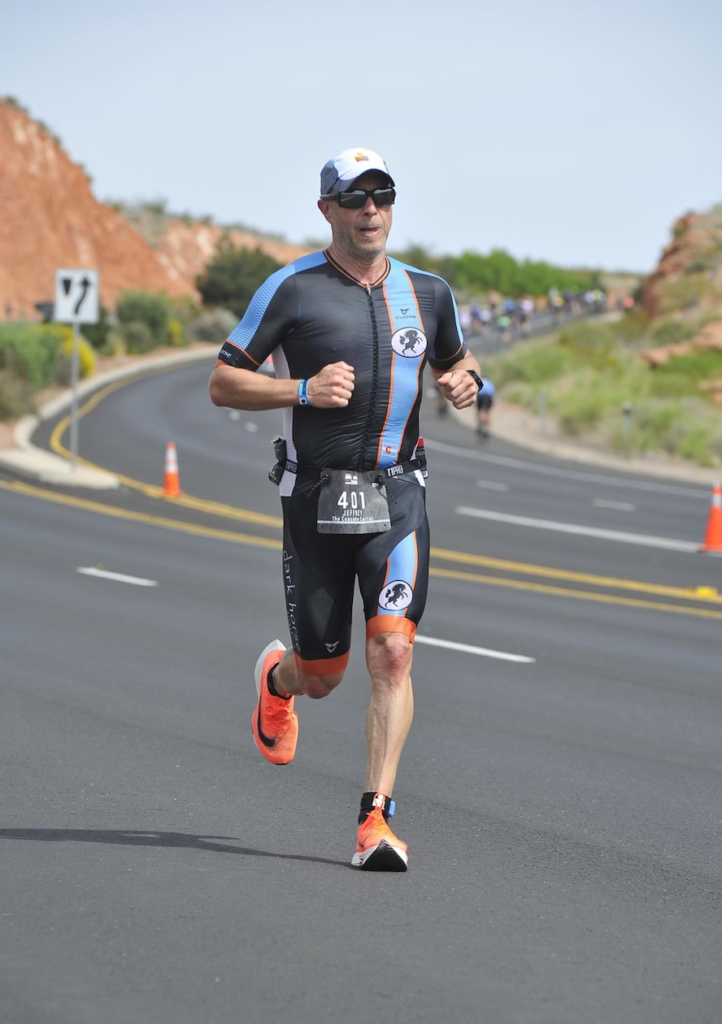
One of the best ways to prepare for the mental challenge of your Ironman is to practice an optimal mental state during training. A well-trained athlete can significantly under-perform if they have not given equal consideration to the psychological task at hand. While the swim may be daunting and the bike challenging, the marathon is the most physically rigorous element of the Ironman, and as such, requires incredible mental fortitude to perform at the upper end of your capabilities.
I like to have my athletes take a structured approach to mentally preparing for the Ironman marathon, done in steps. Work through the following five steps, one after the other, to ensure you have covered all bases in your psychological preparation:
Step 1: Think About How You Want to Treat Yourself
It is easy to slip into a spiral of negative self-talk and doubt when you are facing another 20 miles of running; if you are very tired, and particularly if things aren’t clicking. Pre-determine an emotional reason for being out there, or a personal theme. You will ask yourself, “What am I doing out here?” so it’s important to have an answer on hand. It may be to inspire your family or kids to go after their dreams…or perhaps it is just to constantly remind yourself that you have chosen an exceptional thing to do with your life’s journey…or that you are an amazing athlete and person for even toeing the line of such a daunting and monumental race. If you trained hard, accept that the race was not going to be easy and that this is the challenge you signed up for. Bring some positive thoughts or themes with you from which you can reflect upon when the going gets tough.
Mentally rehearse the conversations you want to have with yourself. It’s easy to talk yourself down when you are tired and blood sugar is low. Being negative gives you absolutely nothing as far as performance benefits. In fact, it takes precious energy away from going faster.
Recognize negative thoughts in training, and find ways to turn them into positive moments. Become aware of your self-talk. Decide to speak to yourself with respect and encouragement. We hear many athletes talking themselves into having a bad race. Talk yourself into success, and allow yourself to realize your full potential. Being good to yourself is habit-forming. You learn to throw out negative thoughts before they occur, and begin to consistently use positive self-talk and self-imagery.
Step 2: Get a Home Course Advantage
If you ever had to run an Ironman marathon on your favorite training route at home, you would have much greater odds of success. You would know every hill gradient and duration, where the shade is, the wind tendencies, cambers, down hills to expect, rough terrain, etc. You would have a good sense of how to manage your energy and where you need to be exceptionally strong and focused. You would know how to push through the challenging areas because you have done it before. The goal for any major event is to give yourself as much of the “home-course” advantage as possible. Optimally, you would try to do a training camp on the course in prior months to learn and master the course. If that isn’t possible, tour the course on race week and run key portions of it in your race-taper sessions. Ride the marathon course on your bike. Take a map and pen and write notes on what you see out there. Try and identify landmarks along the way that are at critical sections of the course. Your goal is to be able to retire to your hotel room at the end of the day and have a fairly clear picture of the course in your mind, with some notes handy to reflect upon.
Step 3: Realistically Prepare Yourself for The Effort
Having learned the race course, revisit some of your best training efforts from back home and review how they felt as your progressed. Next, place that mental image of your training efforts on specific areas of the Ironman marathon course. It is important to be realistic, but not fearful, of the effort it will take to tackle the marathon. Be realistic about your skills and abilities as well. It is a recipe for disaster for you to expect to greatly exceed anything you have done consistently in training, and will be deflating if you are missing the mark. Mentally rehearse what it will feel like to have a steady and solid day out there, the level of effort required and the biomechanical elements of your best Ironman marathon stride. How will you feel at three miles, six, twelve, twenty and so on?
You can create technical cues to bring yourself back on task. These cues are words or short phrases that remind you of being technically efficient and bring you back on task, replacing negative internal conversation. They can also help you lift you to another level of performance when things are on track and progressing well.
A few run cues I use with my athletes to keep them moving well are “quick, light”, “strong and forward”, “rhythm from the arms”, or “loose shoulders, open lungs”. These cues are personal and should be meaningful for you. Share them with your supporters, as they will help give you energy when you are in the heart of the marathon.
Step 4: Review Your Pacing and Nutritional Strategy
Running your correct aerobic and patient pace (practiced in training) will help conserve blood glycogen, so check your time splits along the way to make sure you are on track.
When blood glycogen gets low from caloric deficiency, it’s easy for the mind to start playing tricks on you. You might suddenly not feel hungry or thirsty, or become very emotional, or very dull, classic signs of “bonking”. It is critical to have a pacing strategy supported by a nutritional strategy, and to review in your mind beforehand. When will you eat, and where? Learn where the aid stations are, decide if you will walk them or not, and how it will feel to get running again after a stop. Commit to restarting running at the end of the aid station. Think about the tell-tale signs of bonking and how you will problem-solve to work through a bonk if it happens, by slowing the pace, or walking, and getting some extra hydration and nutrition in.
Write out a schedule of what you will eat, where and when, considering aid station locations, and visualize executing your schedule on that specific marathon course.
Step 5: Have a Re-Focusing Strategy
Inevitably, over 140.6 miles, you will go through a hard, extra challenging area of the race, and the chances are it will be late in the bike, and intermittently through the run. The best athletes are great at focusing and staying on task, and they are also great at problem solving when things aren’t going well. If you get blisters, a cramp, bonk, or bloated, your goal still remains doing the best job possible given the set of circumstances you are facing. Try and remain calm no matter what, get back on task as soon as possible, and maximize what you can do right now, rather than stressing about what you can’t do. Decide that if you are thrown a curve ball, you will remain calm and make the best high performance decision you can, given the variables presented to you.
Lance Watson, LifeSport head coach, has trained a number of Ironman, Olympic and age-group champions over the past 30 years. He enjoys coaching athletes of all levels.
November 16, 2021
Key Ingredients of Ironman World Championship Qualifiers
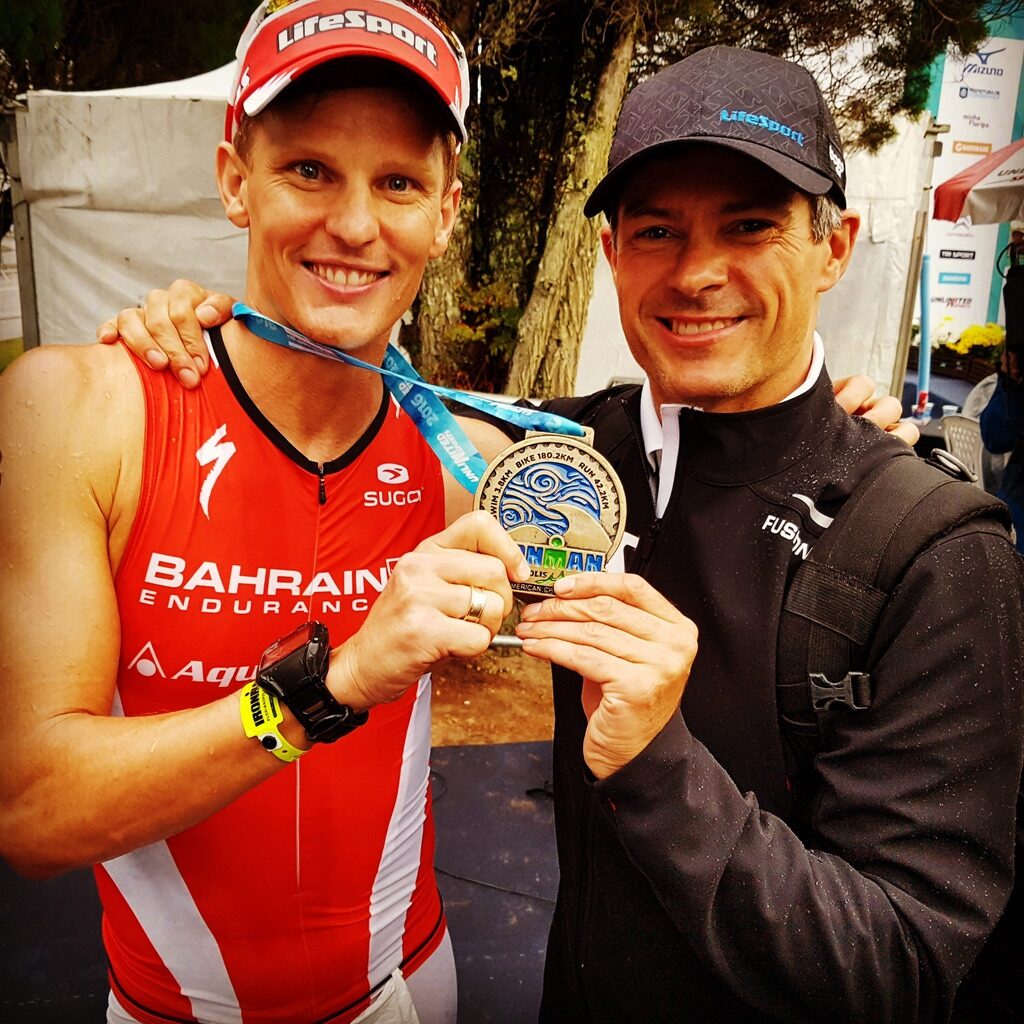
When examining Kona Qualifiers, the levels of competition are so strong that there is no accidental way of rising to the top. It is harder and harder to qualify with more Ironman events worldwide and limited spots to race in Kona. To be able to stand on the podium at any Ironman, all the competitors must arrive with peak preparation – they are in their best physical shape. What sets the champions apart is their mental edge, which is cultivated intentionally in training and through past race experiences. In my many years of coaching I have come to see some common themes in mental traits shared by top age group athletes.
Commitment
Number 1 is commitment to the A-race goal. The majority of age group athletes have incredibly busy lives; many work demanding full time jobs and will often have a family as well. The athletes that make it to Kona are those who, with the support of their spouse or significant other, make it their priority to commit to getting the required training in. They review their training schedule in TrainingPeaks the week prior. They then plan their work/social schedule with the completion of training being the number one goal. If this means joining a 6:00am Masters Group or getting up at 5:00am for a trainer session, that is what they do. They then figure out how to fit everything else in their life around it.
Positive Mental Attitude
To balance the long and arduous physical preparation of reaching the top, champions consistently maintain a positive mental attitude. Racing the Ironman distance as an amateur is tough and there is no financial reward. This doesn’t mean there aren’t moments of down, but overall thoughts are positive – this is reflected in the adage, if it was easy, everyone would do it! Therefore it must be a passion. One can’t put in 15-20 hour training weeks without a positive mental attitude and a strong sense of self-motivation to assist getting up early mornings and heading out when it’s cold and dark.
Along with the positive attitude is the use of positive imagery. They show up to practice ready to embrace the workout, whatever the coach prescribes. Successful qualifiers will visualize their success as they train. In their mind they will see themselves exiting the water after a strong swim, cresting a hill with a sense of power and even running through the finishing chute as a champion. They will also have cues as to how they will to feel on certain parts of the course.
By the same token they have to ability to compartmentalize. If a particular workout doesn’t go well, there is the immediate reflection of what happened and why. Then it is put aside and the athlete will move on to the next one. No dwelling on the past. The athlete has a strong self-belief in their abilities which is backed up by their previous training data.
Patience
Preparing for and racing an Ironman is not a venture one undertakes if one is seeking an instant reward. Getting to the start line healthy and strong requires that all the building blocks along the way were set in place properly and in the correct order. This is a process that takes years, not months or weeks. And that is just to get to the start line. Once the gun fires, an Ironman day unfolds steadily minute by minute, hour by hour.
When they are racing, champions don’t get ahead of where they are in the race. They focus their mental energy on getting the most out of their body at that moment. If it’s a tough part of the swim they are thinking about perfect technique for every stroke. On a climb, if a competitor is pulling away, they focus on pushing with a power they can maintain. It is necessary to stay in the moment. I often say to my athletes you don’t “race” the Ironman until the second half of the marathon.
Confidence
You can’t control who shows up to an event. Kona qualifiers perform on the day to the best of their own abilities and don’t get carried away with who else is there or what they are doing. Many things can happen during an Ironman and will immediately change the day, whether it is a mechanical, poor pacing or nutritional mistake. From consistent training, the top athletes know their swim splits, power outputs on the bike and run paces. They know there is no magic piece of equipment that is going to make them go 20% or 30% faster. They know exactly what they are capable of and stick to the plan they set out with their coach. This confidence comes partially from the physical preparation for the event.
They are also methodical. Everything related to racing the Ironman is laid out beforehand. In the months leading up to the race all equipment is tried and tested, discarded if it doesn’t fit or work. Nutritional plans are dialled in regularly on training rides and runs. As I have written about in the past pre-riding the course or simulating the terrain during takes the guesswork out come race day. This way there is no last minute scrambling or unsureness whether something is.
Toughness
I have often heard my athletes being labelled tough in the face of adversity. Especially after a race that was cold or held in terrible conditions. Or how a racer recovered after an especially bad patch on the run. I prefer to look at this as that athlete staying in the moment and just focusing on what they can do right then. If they can’t run, at least walk fast; if they are grumpy and low in energy, have something to eat. The important thing is that champions look for the best option for any given situation. They also anticipate the hard parts of the course and prepare for the physical discomfort. These sections are opportunities, not a section to dread.
There are many factors that play a part in how champions rise to the top; the mental game is definitely just as important as being physically prepared.
Thank you to LifeSport Senior Coach Dan Smith for his contribution to this article.
Lance Watson, LifeSport head coach, has trained a number of Ironman, Olympic and age-group Champions over the past 30 years. He enjoys coaching athletes of all levels.