Simple Feed
October 13, 2021
Death before DNF?

Ironman is hard. It exposes your weaknesses; the gaps in your preparation; your mistakes on course. It’s a long day and a huge goal. You don’t sign up for Ironman because it’s easy. It’s a massive challenge to overcome and that’s what makes it is so rewarding. It pushes your limits and shapes your character.
The epic nature of Ironman inspires the mantra: “Finish No Matter What!” But should this always be the case? I have been to the Ironman World Championships many times where top contenders received accolades for walking the marathon. That is the spirit of sport. They are in it with the rest of us mortal age groupers and they value finishing the distance as much as racing the distance. No DNF’s!
But what if you are managing an injury out there? What if you have severe nausea or a badly upset stomach? What if you are off pace from your goal or personal best? I’m presenting a little bit of decision-continuum here…where do you draw the line?
I once coached a woman who was in a sprint finish at Kona. Can you imagine being at the end of a marathon and sprinting like it was a 5K? That is painful. She was a professional and the previous year was the top American, finishing top 10 overall. She actually made the NBC highlight reel because of her epic finish. She was managing an injury going into the race, a “sore leg” and was so determined she probably undersold it a little bit to me. After the race we discovered she had a fractured femur. The sprint was for 23rdplace. Was it worth it to finish? She was injured for months.
I coached another professional athlete who had complained of abdominal pain throughout the week, but again had downplayed it. Her appendix ruptured at mile 10 in the marathon. I had to help pull her off the course. She was in the top 15 at that point.
These are not crazy people. They are determined individuals who are passionate about sport – just like almost every athlete who hits the start line of an Ironman.
Two weeks ago, I was at Ironman Boulder. LifeSport Pro Brent McMahon had come off a winter of injury and was in need of a good result to qualify for Hawaii Ironman, the World Championships. Timeline to October predicated us choosing a spring race. While we knew he was fit because he had won a 70.3 in Monterrey four weeks prior, we also knew he was slightly underdone in terms of training. And although adequate time was spent at altitude in preparation, racing at altitude was still a challenge. The X Factor for him was the frigidly cold air on race day. The confluence of those three factors led to a perfect storm that shut his body down at 18 miles. It was too much metabolic stress. He could have walked, jogged, shuffled into the finish. Do you think he should have? There is great honor in finishing an Ironman.
On that day I advised Brent to DNF. You should understand that there is no more difficult conversation for a coach to have with an athlete on race day. But the reality is that we needed to limit damage so he could regroup and try again for Kona before the qualifying cut off. The strategy paid off in the short term. Two weeks later he was able to win a silver medal at 70.3 Mont Tremblant. This was not only good for his sponsors (which is critical for his survival in the sport), but also good for his spirit going into his next qualifying attempt at Ironman Lake Placid. If he had finished in Boulder, he would not have been able to race this weekend, earn a living, and his preparation for Lake Placid would have been compromised.
Lance Watson LifeSport head coach, has trained a number of Ironman, Olympic and age-group champions over the last thirty years. He enjoys coaching athetes at all levels. Contact Lance at lance@lifesportcoaching.com to tackle your first Ironman or to perform at a higher level.
For more training tips, follow LifeSport Coaching on Facebook, Instagram and Twitter.
October 13, 2021
How to recognize and deal with unproductive race stress.
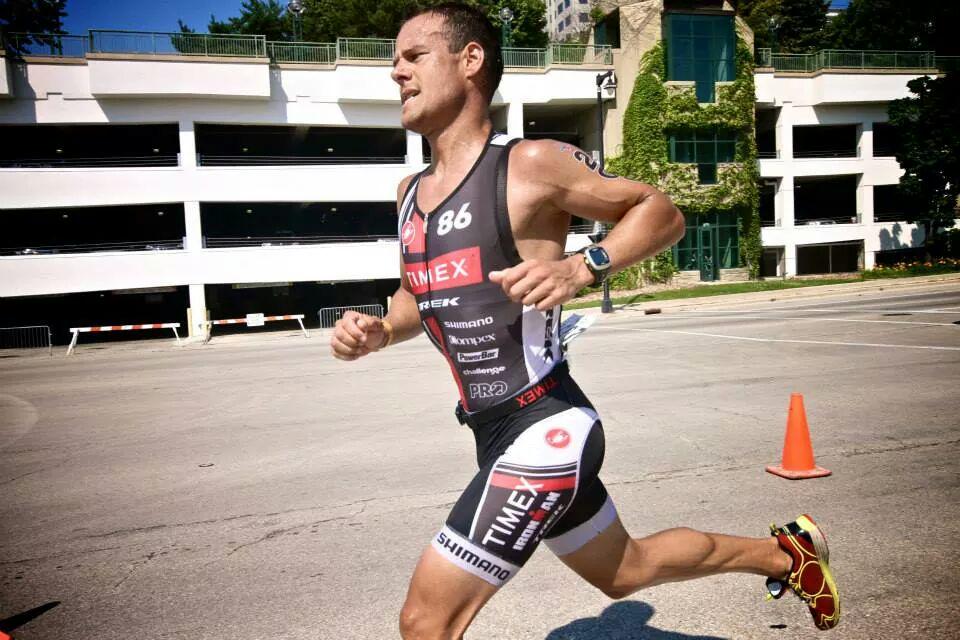
Racing, particularly when you’re new to it, can push you out of your comfort zone. Let’s face it, there is a lot personally invested in getting to the start line. Hours of training, financial investment, and the lurking uncertainty surrounding the unforeseen variables inevitable on race day. For many people, the most anxiety arises setting up transition on race morning or waiting in the rolling swim start corral and contemplating navigating the open water amongst all the other athletes.
While there are several strategies for dealing with stress, it’s good to first understand what is happening in your body when you feel stress rising to anxiety. There are a number of physiological responses unleashed, which are amplified if you haven’t mentally prepared for the environment.
When you experience a stressful event, the amygdala, which is the area of the brain that contributes to processing your emotions, sends a message to be hypothalamus, your body’s “command center.” The hypothalamus basically controls involuntary body functions – dilation of your blood vessels and the bronchioles in your lungs – athletically speaking, your breathing rate, blood pressure and heart rate. if your hypothalamus is your command center, then your autonomic nervous system is the messenger. The autonomic nervous system is comprised of the sympathetic nervous system and the parasympathetic nervous system. The sympathetic nervous system is like an accelerator, sparking the fight-or-flight response with a burst of energy. The parasympathetic is the opposite. It slows you down to calm you after a stressful stimuli has passed.
Imagine that the amygdala hollers “DANGER!” The hypothalamus receives the message, takes control and fires up the sympathetic nervous system, which in turn tells your adrenal glands to start producing adrenaline. Heart rate increases, pumping more blood to the muscles and other vital organs. Airways to the lungs open, resulting in more oxygen traveling to the brain making your senses sharper. This all happens faster than we can process and is why you may be able to react to a life-threatening situation instinctively without processing it first, like swerving around a dangerous obstacle on your bike.
Sometimes that same stress reaction causes us to freeze rather than triggering the fight-or-flight response. When somebody experiences extreme anxiety, they may become hyper tuned into many body functions that are typically autonomic or involuntary. Automatic processes become harder to perform, immobilizing the individual. You can imagine the internal conversation: “My heart is racing, I’m sweating, my stomach is flipping, I was really afraid this was going to happen! How do I stop it?”
The result of your body over-processing is essentially a deer-in-the-headlights moment. Interestingly, there is an evolutionary element to this: Survival. Sometimes In nature, when in the crosshairs of a predator, it is actually safer to stay still to avoid being spotted, rather than to bolt. But completely stopping movement in an open water swim is typically not a good strategy!
Mentally rehearsing is one of the best ways to preemptively reduce the risk of overwhelming anxiety and stress. Mental rehearsal is not simply positive thinking. While we might talk about taking deep breaths, repeating a calming mantra or listening to music, these are really just distraction techniques. They may help settle you down in the moment, but they don’t prepare you for a curveball. If you are faced with an unexpected or frightening situation and you haven’t prepared for it, quite likely stress and anxiety will accelerate.
Mental rehearsal, done well, is much more pragmatic than simple positive thinking. An effective way to rehearse is to try to anticipate everything that might go wrong and then to come up with strategies for dealing with it. “If I get hit in the head during the swim, how will I react? How will I handle that situation?” In practical terms, this involves assessing your skill set and analyzing the most successful strategy to deal with each specific challenge.
Let’s consider swimming contact again. If you are fearful of the chaos endemic in an open water swim start, simply turning on calming music and telling yourself it will be OK may help with both your feet planted on dry land, but it is not effective when you are actually knocked around during the swim start because you have not rehearsed strategies for recovering in that moment. But if you can visualize what it will feel like to make contact with other swimmers, mentally putting yourself in that environment, and visualizing strategies for coping with subsequent stress, then you have prepared yourself for that situation. Strategies might include focusing on breathing, swimming to the outside of the pack, or rolling onto your back to regroup. Consider recategorizing swim contact as an incidental, accidental or even premeditated part of the sport, and own a strategy to quickly refocus on a stronger element of your swim (stroke rate, mechanics, or your kick) while moving a few inches away to give yourself space from the perpetrator.
Strategies for mental rehearsal should be individualized according to your skill set. Understanding the physiology of stress and anxiety allows you to wrap it into a context so that you can apply specific mental preparation strategies to cope with the physical state, or better yet, preempt it.
Link to Training Peaks article.
Lance Watson, LifeSport head coach, has trained many Ironman, Olympic and age-group Champions over the past 30 years. He enjoys coaching athletes of all levels. Contact Coach@LifeSportCoaching.comto tackle your first IRONMAN or to perform at a higher level.