Simple Feed
First published in Training Peaks, December 2021.
Over the past several months I have been writing about novel therapies that are marketed to athletes to improve recovery from injury. In this article I am going to consider a relative to something I wrote about recently, low level laser therapy (LLLT) that is advocated more as a recovery tool than for helping with injuries.
As you may recall, LLLT leverages photobiomodulation to exert its effect on the body’s tissues. The theory behind this is that when light of certain wavelengths penetrates the tissues it causes changes within the cells to produce a result. In the case of LLLT research demonstrated those results were at best pretty modest with evidence really only to support its use for chronic achilles tendinopathy.
While LLLT utilizes light of a fairly short wavelength, red light therapy makes use of visible light with a much longer wave length and is suggested to have very different effects. There are several manufacturers of LED red light panels who claim that their use can impact everything from sleep quality to skin appearance to sexual function to athletic performance and more.
These panels are quite costly, ranging anywhere from hundreds to thousands of dollars so the discerning triathlete would be wise to wonder whether this is an investment that can be expected to pay off with any of the promised benefits.
The theory underpinning how red light therapy works is similar to that for LLLT. With red light therapy, longer wavelength visible and near infrared light is applied to the skin and upon penetrating the cells, mitochondria absorb it and have their function modified so that they produce more ATP, the energy molecule for the cell’s functions. This is hypothesized to improve performance and endurance sooner after hard workouts than without using it.
The evidence to support most of the claims being made by manufacturers of red light therapy devices is either very scarce or very weak or both. However, there is a fairly robust amount of evidence on the use of this modality for exercise performance. A review article from 2016 summarized much of this evidence.[i]
A first group of studies evaluated red light therapy when applied to the upper extremities as a means to improve performance or recovery after hard efforts. Studies evaluated both objective markers of performance as well as biochemical markers of cellular damage and subjective reports of muscle soreness. While some studies in this group reported improvements in biochemical markers of cellular damage with the use of red light therapy, this finding was not associated with any objective measures of improved performance nor any reported improvements in delayed onset muscle soreness (DOMS). A single study in this group of ten reported a small improvement in performance.
In another group of studies evaluating red light therapy applied to the lower extremities the results were very inconsistent with some studies finding improvements in performance and others not. Similarly there was inconsistent reporting of improvements in subjective reports of discomfort associated with DOMS and no findings to suggest any changes in biochemical markers of cellular damage in these groups of athletes.
A final group of studies sought to determine if red light therapy might have longer lasting effects on cellular functions. In these papers, researchers reported on experiments that were designed to evaluate if red light therapy could change cellular functions over time in a way that would benefit an athlete by leading to improvements in muscle tissue architecture and the ability to handle oxidative stress.
It was theorized that longer term exposure to red light therapy might up regulate the expression of certain genetic pathways altering both of these characteristics. Once again the results were very inconsistent. Some studies did report changes in muscle architecture over time but those changes were not associated with any performance benefits. No studies found any improvements in the ability of tissues to handle oxidative stresses.
It would appear that based on what is known about photobiomodulation and specifically red light therapy at this juncture, it remains an interesting yet very much unproven technology. While there is clearly the ability to mass produce and market these devices the evidence to support their use remains as yet, lacking.
It would seem that this is another example of a technology that has significant theoretical benefit but no proven clinical benefits just yet. That may change as additional studies are done, new applications are developed or the technology is modified in some way but for now, red light therapy remains very much a novelty and not worth the significant investment.
Train hard, train healthy.
Jeff Sankoff is an ER physician and LifeSport Coach with over 20 years of experience in triathlon as a coach and competitor. Jeff is also the founder of the Tri-Doc Podcast. To contact Jeff about coaching and chasing your triathlon goals, contact him at jeff@lifesportcoaching.com.
[i] Ferraresi C, Huang YY, Hamblin MR. Photobiomodulation in human muscle tissue: an advantage in sports performance? J Biophotonics. 2016;9(11-12):1273-1299. doi:10.1002/jbio.201600176
December 11, 2021
Christmas workout!
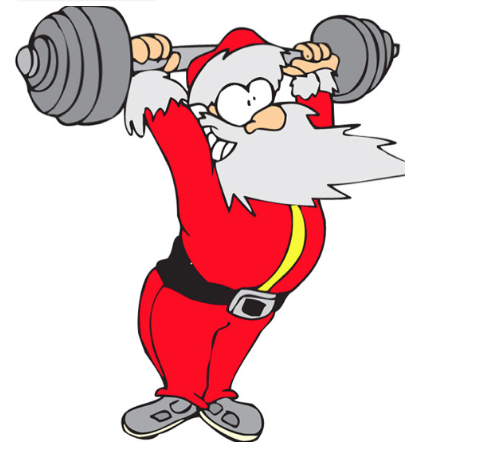
With Christmas holidays approaching, festivities abound and there are several distractions pulling you from your hard-core training program. In an effort to help you maintain dedication to personal excellence, I have drawn on my 30 years of coaching experience to piece together a holiday specific training program. The key to success is following it down to the finest detail. While it may not necessarily make you faster, it should certainly keep you entertained!
Dec 24th Christmas Eve:
Run: 4 hour fartlek run and last minute Christmas shop. Run vigorously between shops at half marathon pace. Allow no more than 10 minutes recovery shopping per store to maximize training effectiveness and minimize shopping time. Use of a shopping cart is allowable. Consider wearing extra deodorant in consideration of other shoppers.
Strength: Pull out tomorrow’s frozen turkey (at about 15-25 lbs) and complete lunges, squats, bicep curls (2 frozen chickens will work here), and bench press.
December 25th Christmas Day.
Brick: Bike- teach a kid (yours or somebody else’s) how to ride their new bike. Take turns on the new bike, role modeling good technique on a pint size frame, and alternately running down the street as acting as spotter. Recovery drink of Eggnog for calcium, protein and simple carbohydrates.
December 26th Boxing Day.
Run: Repeat Christmas Eve run, this time returning gifts. For those looking for a few more miles, consider hitting a couple of Boxing Day sales. Refuel every 60 minutes with leftover turkey sandwich.
Mental training: Hone mental skills and focus by tackling a 2000 piece puzzle or a full day game of Risk.
December 27th
Swim: Wear wetsuit (preferably the new one you bought yourself for Christmas) around the house for 30 to 60 minutes. Do 3 sets of 10 pushups. Hop in the shower.
Cross Training: 60 minutes of Ice-skating. Whether you can skate or not, I can guarantee that tomorrow you will wake up sore, and that’s got to be a good thing, right?
December 28th
Bike: After goofing off for a few days, get out for the muddiest, nastiest mountain bike you can find, and spend all day out there. If there is a single clean spot on your bike or body, head back out for another loop. Pack a picnic of Christmas cake and pumpkin pie. Leave the gels at home!
Swim: Do swimmer’s arm circles (i.e. like the Olympic swimmers do prior to racing) while your training partner hoses the mud off you from your mountain bike.
December 29th
Run: Hill Reps. Find a mountain and go tobogganing. Run the up hills; recover on your back, stomach, butt or otherwise sliding down. For added resistance, tow a couple of kids up the hills.
Strength: While in the snow, build a snowman. Challenge yourself by Olympic lifting progressively larger snow-boulders over head with the “clean-and-jerk” technique. Give a good Schwarzenegger growl upon completion of each lift.
December 30th
Swim. OK, you should actually go to the pool today. The goal is to get rid of leftover Christmas chocolate, prior to the New Year. Consume one “Black Magic, Toffeefee, Turtle” or similar for every 100m you swim. The more chocolate you have, the further you swim.
December 31st, New Years Eve
Run: 2hrs of street hockey or flag football. Start easy as your fitness and endurance will guarantee making all the big plays late in the game as your less super-fit friends and family run out of steam.
Cross Training: a minimum of 2hrs “Dancercize”. Make sure and place extra focus on core and hip flexors as you keep your moves funky- swing those hips! Replacement fluid should be triathlete-specific. Consider Vodka and Red Bull, Gin and Gatorade, or Kahlua and PowerBar Protein drink as athlete friendly New Year’s beverages.
January 1st, New Years Day
Run: 1:00am run home from wherever you are. You don’t need to be driving this AM! Completing one mile per adult beverage consumed will keep you honest one way or the other.
Swim: After sleep in, hit the Polar Bear swim! Warm climate athletes fill bathtub with ice.
Good luck with your training, and, don’t forget your New Year’s resolution: a renewed dedication to health and fitness, and contributing to a kinder and more peaceful world.
Happy Holidays From LifeSport Coaching!