Simple Feed
December 6, 2021
Boost your weakness, now and long term
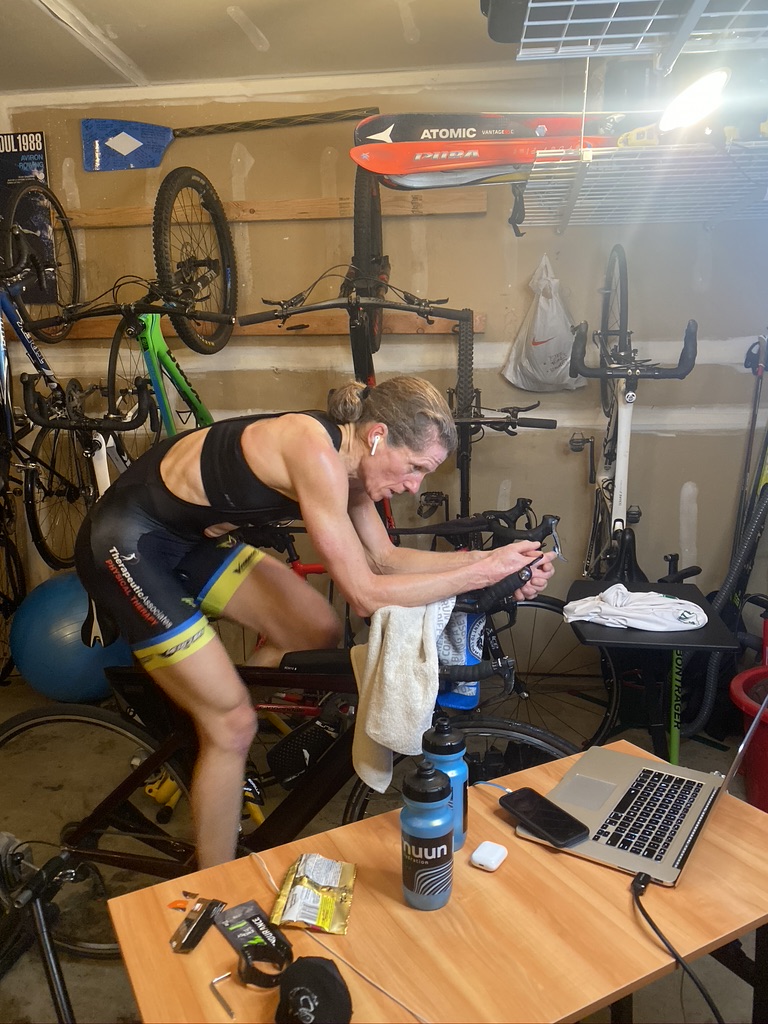
I regularly incorporate single sport focus or emphasis phases in my athlete’s training, to hone an individual event or a specific aspect of that sport. 12-16 week phases have the most impact on your long term development, but you can also increase emphasis in one sport for 10-14 days and get a “boost” in that sport, and push a neglected are to higher fitness.
For a 3 month emphasis, pick a meaningful event to end the phase with, such as a bike race, an open water swim competition, masters swim meet, or a half marathon. Try and plan a couple more “building block” events along the way to work towards the goal event, and to keep you excited. You will learn some tricks of the trade from single sport athletes by participating in individual sport competitions that might not be apparent in triathlon competition.
For a 2 week boost phase, increase frequency, volume or intensity sessions in your area of need. Your training program should be built around the area you are emphasizing, whether it’s your swim, bike, or run. You goal is to hit your “boost” sport fresh, and consider the rest of your activities in the other two sports as fitness maintenance rather than fitness building.
Keys for progressing in your 3 month sport emphasis phase for long term development:
- Pick a meaningful goal event for the end of the focus phase.
- Incorporate 3-4 weeks of base work (i.e. long endurance sessions in heart rate zone 1 and zone 2) in the focus sport. Add one extra base session than you normally would in that sport during regular triathlon training
- Do the first “building block” competition at the end of the 3 week phase
- Move into 4-6 weeks of threshold emphasis (i.e. short-rest intervals, heart rate zone 3 and 4). Still do base once a week. Do one more threshold session per week than you would normally do in your triathlon training for that sport
- Do 1-2 more “building block” races in the threshold emphasis phase.
- Move into 2-3 weeks of speed emphasis (i.e. high speed, long-rest intervals, heart rate zone 4 and zone 5). Reduce base, maintain 60-75% of your threshold work, and do 1 more speed session per week than you would normally do in regular triathlon training
- Taper for 7-10 days and your goal competition.
Keys for progressing in your 10-14 day “Boost Sport” phase to super charge a single sport:
- Increase frequency in the boost sport by 1-2 sessions per week.
- Decrease frequency in the non-boost sports by 1-2 sessions week.
- Assess more specific areas of need in your boost sport- is it run threshold, bike hill climbing strength, open water stamina, etc.
- Build your program around the boost sport to ensure you are better prepared for your key sessions. Make sure and have rest days between your higher intensity boost sport sessions.
Other thoughts to help you along the way:
- Seek someone with technical expertise in the focus sport during this phase, and put more energy into improving your form and biomechanics.
- Think like an elite single sport athlete. “I am a distance runner…”
- Learn everything you can about your focus sport during the phase while you are immersed in it.
- Enjoy meeting new people at different sporting events!
Finally, when you are in race season, stay true to your planned-out, balanced triathlon training plan, but still be in tune with how you are doing in all three individual events.
If you have been struggling in an area for a couple years, incorporate a three month emphasis phase into your annual plan. If you work with your coach to carefully dissect the individual components of your training, come race day you should be ready to put it all together for a great result.
LifeSport head coach Lance Watson has coached a number of Ironman, Olympic and age-group Champions over the past 30 years. He enjoys coaching athletes of all levels. Contact Lance to tackle your first triathlon or to perform at a higher level.
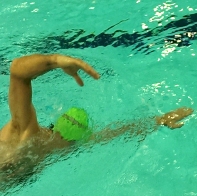
For a triathlete without a swim background, there are times when noon hour masters at the local pool can be frustrating. Triathletes are used to having results from strong work ethic and training, and swimming is the one discipline where the force applied does not directly transfer into speed. The foundations to your swim training are working on body position, and stroke efficiency: these are the essential components to getting faster in the water. One of the reasons why we spend a lot of time in the pool during winter months is to optimise our swim stroke and get in a lot of volume. However this will not necessarily translate into faster tri times as open water swimming involves a lot of specific skills: skills that may not be worked on in regular master practices of swimming up and down the lanes in single file. Here are five drills that will have you swimming like an expert in next season’s triathlons.
1. Sighting
Sighting is the most important orientation drill that should be worked on in the pool. The ultimate goal in sighting is to be able to incorporate it into your stroke pattern, and should be achieved without breaking your freestyle stroke. To accomplish this sighting needs to be incorporated into your regular breathing pattern in a way that allows your body to stay streamlines. To do so, you’ll need to start sighting right after your hand enters the water at the start of your stroke. You’ll take advantage of the brief moment where your hand goes toward to bottom at the catch phase to lift your head and peek a look in front of you. From there, you’ll start the pull phase in sync with lowering your forehead and starting your regular breathing pattern to the side. Take a peek every 6-10 strokes, feeling your body position maintain it’s strong shape. This drill should be practiced on both sides as you might experience wind and waves coming from one side or the other depending on races. It is even better to add it in longer endurance or fartlek sets where you’ll try to sight at the lowest energy cost possible.
2. Closed-eye swimming
Swimming straight in a pool is quite easy: you go back and forth along the big black line at the bottom of the pool. What you don’t realize is that you are subtlety adjusting your stroke to make them equally powerful. As soon as you close your eyes (or you swim open water with no reference point at the bottom) you’ll see that you don’t swim as straight as you might think. Try to do 10 strokes with your eyes closed (optimally in a quiet lane) and see how much you’ve drifted. Repeat the drill a few times until you swim in a straight line. In conjunction with sighting, straight line swimming will definitely shave a lot of time in your next tri swims. You’ll be able to sight and put the hammer down swimming straight.
3. Feet Drafting and Hip Drafting
Drafting in swimming, is a tactical skill that if done properly, can shave up to four seconds per hundred off your time! Do the math: that’s a minute shaved on an Olympic distance and two and a half minutes on an Ironman for the same energy expenditure. There are two types of drafting in swimming: feet drafting and hip drafting. The easiest one is the feet drafting. To do it properly, you need to be close enough to have your fingertips in the bubbles made by your lead swimmer but without poking him at each stroke. Once you are at the right spot, try to adapt your stroke rate to stay at the same distance off the lead feet.
Hip drafting allows you to take advantage of the wave made by the lead swimmer. It doesn’t necessarily make you a lot faster but it will slow down the lead swimmer by creating an effect of drag. Drafting sets are tough, fast and a lot of fun. You can do them by pairing up, or in larger groups if you have a homogenous group of athletes. You can use drafting sets to develop most of the energy systems. For example, instead of doing a long endurance set of 3 x 800m at an easy pace, include drafting in it and change the leader every 200m. To be more specific, you could also add sighting for the leader on the first 100m that he leads.
4. Buoy turning
If you have access to a pool where you can swim with the lane ropes removed, and a buoy placed mid pool, you can simulate buoy rounding. The first thing to think about in buoy turning is to increase your kicking to create momentum and space. In races, with the decreased speed, there is a larger number of athletes packed at buoys. Kicking harder will help you avoid getting swum over and jammed up under the buoy. Technically, the best way to negotiate buoys is to enter your hand closest to the buoy as wide as possible pulling in an angle from the outside to the inside. You’ll then do the opposite with the other arm, crossing at the entry and pulling toward the outside at the end of the stroke. Within two complete cycles, you’ll have negotiated the turn as efficiently as possible. Practice this slowly to understand the mechanics, then at faster, race pace rates.
5. Physiological training.
Open water swimming has its own specific physiological demands and there are two areas you can work on to be prepared for this. The first area is to prepare for the blend of energy systems involved in triathlon swimming. Whereas a great 1500m swimmer even splits her whole race, a triathlete usually redlines the first 300m meters before settling into race pace. You need to develop this capacity of recovering from a hard effort at a sustained pace by doing intervals with changing pace and effort.
Sample set: 3-6 x 400m with 45 seconds rest as the first 100m fast (3-6 seconds faster than race pace) followed by 200m at race pace and 100m easy. From there you can vary the length of the fast part, the race pace part and the recovery part depending on fitness.
The second area of open water specificity is the stamina required due to the absence of walls and flip turns. Try to swim in long course (50m) pools as part of your swim training to decrease the flip turns by 50% and get closer to the rhythm that you’ll feel in open water.
Practicing to be a triathlete is a lot about being specific while maintaining a physical training schedule. For swimming open water, practice makes perfect, and you can continue working on these open water skills throughout the winter. You’ll be amazed at how quickly you’ll improve and you’ll see concrete results on race day.
LifeSport coach Philippe Bertrand is a national head coach who has coached the national junior team to three World Championships, along with being an accredited coach at the Pan Am Games. Philippe enjoys coaching athletes from beginners to Olympian level. Contact Philippe to share your goals, race faster, or master the Ironman distance.